Step up to the South West Coast Path Challenge

The countdown has begun with just one month to go before the South West Coast Path Challenge kicks off in October. The event, backed by TV adventurer Monty Halls, aims to set a new world record for the number of times the Coast Path can be covered in one month while raising funds to protect the coastline for future generations.
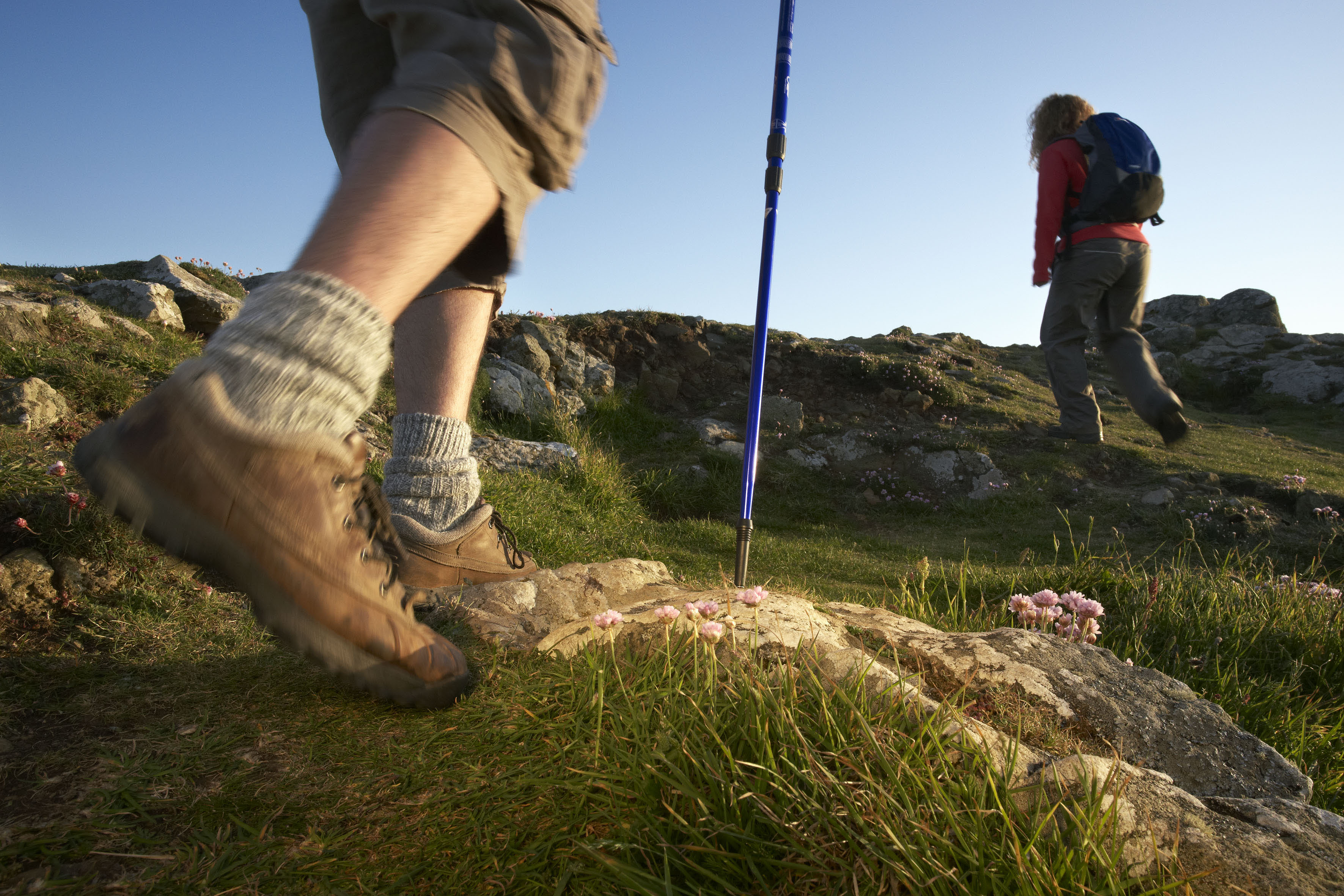
Hikers on the South West Coast path near Polzeath, Cornwall. Photographer Richard Taylor.

Monty said:

“As part of the South West Coast Path Challenge month, I’ll be walking the South Devon stretch from Plymouth to Dartmouth.”

“I am a huge fan of the South West Coast Path – some of my happiest memories have been running and walking it, and it snakes right past my house in Dartmouth. I feel it’s one of the most miraculous trails in Europe.”

Taking part in the South West Coast Path Challenge month is a great way of spending time with the family in the great outdoors, keeping fit and healthy, while getting a sense of achievement at the same time.

Whether you want to tackle a short but demanding section, or take on the whole 630 miles, there’s a walk out there for all ages and levels of ability, and unlike the gym, you won’t have to pay a penny. Be warned, though – it is seriously addictive!

Create your own Challenge from 1 mile to 100 miles or take in the entire 630-mile route – every mile counts! For inspiration visit the website where you can find out what other people have pledged and choose from a tailor-made itinerary, or you can join one of four organised 10 mile Challenge events taking place throughout October including:

3rd October – Minehead to Porlock Weir, North Devon and Exmoor
10th October – Gunwalloe to Lizard Point, Cornwall
24th October – Admiral’s Hard to Mount Batten Centre, Plymouth
31st October – Durlston Country Park and Castle to South Haven Point, Dorset

All of the organised walking routes include parking at the finish and transportation to the start of the walk.

Register to take part at www.southwestcoastpath.org.uk/events/challenge

The South West Coast Path Association is leading on the Challenge event in partnership with the National Trust as part of its coastal celebrations and to help raise much needed funds to maintain the coastal scenery enjoyed by millions of visitors every year. It costs at least £1,000 to look after just 1-mile of Coast Path and it needs your help.

Mark Harold, Regional Director of the National Trust says;

 “We are pleased to be working in partnership with the Association on their flagship event as part of our coastal festival celebrations this year and look forward to seeing how many miles we can clock up in one month.”

Register to take part at www.southwestcoastpath.org.uk/swcp-challenge and share your challenge on social networks using #Challenge630

Fundraising tip: Aim to raise at least £10 through sponsorship. Walk 10 miles and get 10 friends to sponsor you 10p a mile!

What will your challenge be?

Let us know in the comments below or better still, write a short blog post for us to share.

Simon Armitage is standing tall and looking out to sea in his latest book ‘Walking Away’

Further Travels with a Troubadour on the South West Coast Path

Walking Away

Artists and writers have always been drawn to the coast, taking inspiration from the conflicting nature where land and sea meet. Walking Away sees Yorkshire poet Simon Armitage carry on this tradition, following in the footsteps of Coleridge, Hardy and Betjeman, all of whom crop up in this travelogue, which sees him trek along the north coast of the South West Coast Path and then on to the Isles of Scilly. Heaney is referenced too, though sadly because he dies while Armitage is walking along the Exmoor coast, a stretch that is perhaps the most synonymous with our most famous poets.

“… poets and the sea are natural companions…

Armitage sets out to see if poetry will pay his way, giving readings in exchange for food and lodgings and penning new material. After all, he states; ‘…for well over a thousand years poets of every generation and school have addressed the sea at some stage in their writing life. But poets and the seaside…’

It’s an interesting juxtaposition and one that presents itself more than once as he sets off from Minehead to Land’s End, where the built- up ‘theme park’ of the coastal resorts sit shamelessly alongside the natural beauty of the surrounding coast.

As a fellow descendant of the northern half of the country, from a place that as Armitage says is ‘about as far away from the sea as it’s possible to get in Britain’, I was just as keen to see how things would pan out and how he’d be received in the sunnier south. I was intrigued when he records his first experience of Cornish nationalism, for instance. Without stating an opinion, he simply describes a handwritten sign to keep visitors out, which uses less than pretty language, as being ‘scratched aggressively but with a childish hand into the grain.’

His northern view of the world and dry wit seems patronising at times and it’s in this tone that sees him come a cropper when he laments about the litter on the beaches. While not intended as an insult to the locals but rather an emphatic observation, it doesn’t go down well. Neither does his comments about being in Devon to one audience who soon point out that he’s actually in Cornwall. Sitting in the front row, his oldest friend, a Cornishman, smiles helplessly as his homeland takes offence to what he knows is merely a clash of cultures.

Much like the South West Coast Path itself, there are plenty of ups and downs and some onomatopoeic trudging through “sticky mud and squelchy soil”, all the while taking time to step back and enjoy the views. For Armitage, this requires an adjustment to his vision from the ‘moors of home’, but once acclimatised he begins to take the ‘splendour and beauty’ of the scenery for granted.

He doesn’t quite get used to seeing surfers in their signature black suits as he describes them in one instance in the sandy bay as; ‘…dozens of vertical black marks against the yellow background, with dozens of smaller black blobs bobbing around in the waves. Like a Lowry painting but without the clogs.’; and in another ‘…men with the upper halves of their wetsuits rolled down to their waists, partially flensed, or like half-formed creatures still emerging from the tadpole phase.’. In a moment of self-reflection he says; ‘Like life forms from another planet we seem to be the only people not wearing black rubber onesies.’

As he reaches the end of the road, the way people interact with their environment and how the landscape impacts on people themselves leaves a lingering thought about people and place. His poems pay their way and in return, his experiences brings him new material. It seems like a fair exchange and he walks away with his head held high, while looking out across the water towards Samson – his final destination that he didn’t quite manage to reach.

While the coastal landscape never takes centre stage, merely acting as mood music for the physical endurance of this long distance hike and the characters he meets along the way, it is the sea that’s always in sight and inspires what for me was his best poem in the book, entitled ‘From Where I Stand’. It starts like this:

Sleep